The health of your rotating machinery directly impacts the health of your business—you can’t stay up and running without your industrial machinery. But sometimes, maintenance schedules get out of control due to the demands on production and uptime, making it difficult to maintain best practices.
We know that keeping up with your rotating equipment’s performance can be daunting, which is why we’re sharing five easy-to-follow best practices to maintain the health of both your machinery and your business.

1
Start Off on the Right Foot
When you meet someone, you only have one chance to make a good first impression. It’s the same with rotating equipment—you’ve only got one shot to install your machinery properly, and it’s essential to nail it the first time to ensure years of reliable service.
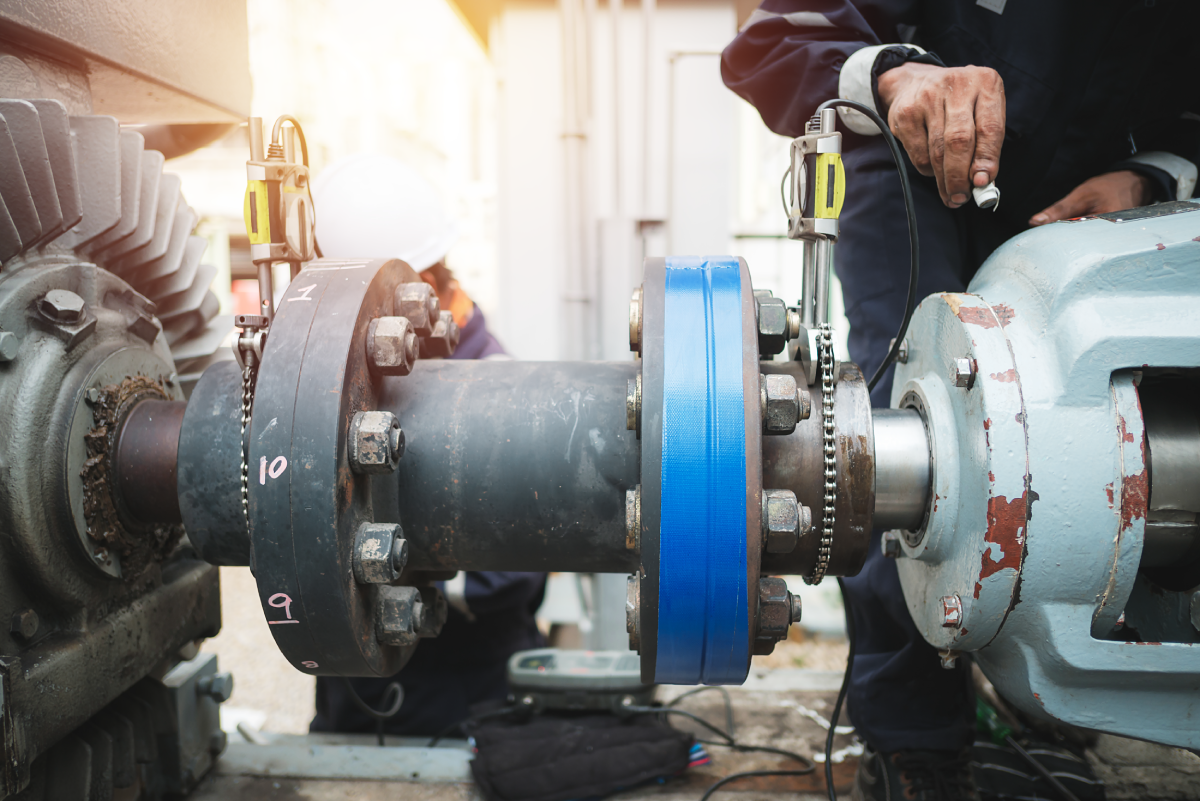
Excessive vibrations in machinery accelerate wear and tear on individual components, such as bearings and shafts, and affect the piece of rotating equipment as a whole. For the best peace of mind and longevity of your machinery, consider grouting and commissioning to ensure that your installation site is optimized before work begins for rotating or centrifugal machinery.
2
Keep it Balanced
Once your machine is installed properly, you’ll want to keep it balanced for smooth everyday operation. Certain maintenance schedules, like in predictive maintenance, rely on estimating when individual components will need to be replaced.
Improperly balanced machines expand the margin for error, causing degradation in certain components far ahead of schedule. This leads to breakdowns, expensive emergency repairs, and possibly even work stoppages and missed production goals.
3
Understand Your Machinery’s Needs
Even two identical industrial machines in the same plant will have different needs. Aside from differences in equipment functions and runtimes, a bearing on one might fail before another, even if they have the same maintenance schedule.
The starting point is the OEM operator/owner manual. Follow the recommended maintenance schedule, which is usually dictated by runtimes or flat time periods. Cornerstone can also assist in developing a PM program for your equipment when no on-site manuals exist.
4
Predict Rather than React
Emergency maintenance is always more expensive and stressful than scheduled maintenance. By scheduling preventive and predictive maintenance, you’re reducing emergency repairs in industrial facilities.
Predictive and preventive maintenance can:
- Happen when it’s most convenient
- Save you money on emergency repair jobs
- Keep you open and working during operating hours
- Prevent unexpected downtime and production shortages
5
Scheduled Maintenance
Nobody knows how your business works better than you do. If you’ve tried to keep a close watch on scheduled maintenance but found yourself distracted with the 99 other things you’re responsible for each day, then it may be time to trust someone else with the job.
Cornerstone Mechanical can be your trusted partner and assume responsibility for all your machine maintenance needs. With our help, you can rest easy knowing a team of experienced reliability technicians is keeping a tight watch on industrial equipment health maintenance.
Give our team a call at 214-225-7038 to see how you can improve your peace of mind with our rotating equipment services.