

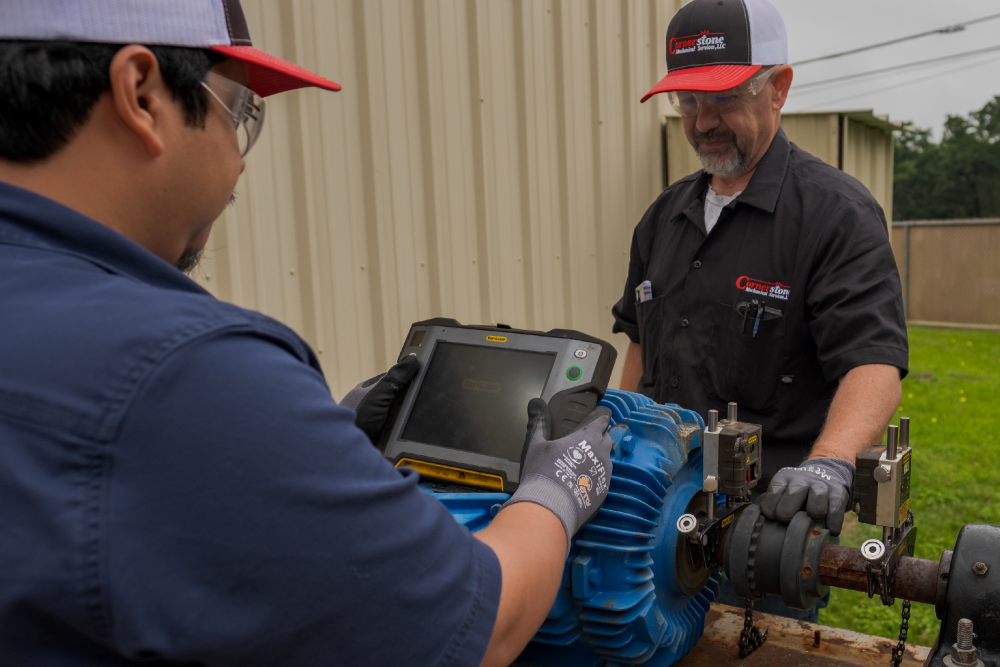
I came up in this industry as an apprentice, fell in love with vibration analysis, spent years with a meter in my hand and eventually earned my ISO Category 4 vibration analysis certification. With AI becoming more prevalent each day, here’s what I’ve noticed and experienced: It hasn’t changed whether analysts are needed. It’s changed what analysts spend their time doing.
Where AI Helps Vibration Analysts
There’s often a gap between what people expect AI to do and what it actually does well. End users sometimes want it to handle everything, from running the analysis and writing the report to generating the work order and being accurate every time. In reality, AI is not a catch-all. It’s one tool in a broader toolkit, and it earns its keep by guiding analysis, cutting through noise and helping an analyst get to a root cause a little more quickly than they would if starting from scratch.
Modern monitoring systems are great at watching. They can check on a piece of equipment two or three times a day, every day. That alone is valuable. Most facilities never had that kind of constant coverage before wireless sensors and algorithmic alerting became more affordable.
AI also helps analysts cut through noise. When a machine generates a mountain of vibration data, an algorithm can flag patterns that match known fault signatures and point an analyst toward a root cause more quickly than starting cold. Having spent plenty of hours combing through raw data by hand, I know what that saved time is worth. It assists with a first pass—not a diagnosis, but a well-organized set of clues.
Where this really adds up is with the more textbook fault signatures—the ones that show up often enough that a system can learn to recognize them reliably. That frees an analyst to spend more of their time and attention on the pieces of equipment and readings that don’t fit a pattern, which is usually where the real problems are hiding. I’ve talked with analysts at industry conferences who’ve started using general AI tools just to help them interpret vibration reports and spot trends more quickly. That’s a good use of the technology: assisting a person’s judgment, not replacing it.
Where AI Alone Struggles
When AI is left to make calls entirely on its own, without a person checking its work, things can get dicey. Automated alerting is good at flagging that something looks different, but it may not know why, or whether the difference actually matters.
Variable frequency drives are a good example of where analysts really shine. VFDs change how a motor loads and behaves in ways that can look like a developing fault, even when nothing is wrong. Telling “This is normal for how the drive is running” apart from “This is an early warning sign” still takes an analyst who understands the equipment’s operating context, not just its vibration signature.
Earlier in my career, I was called to a hospital because a camera used during heart surgery kept moving on its own. I checked the floor for transmitted vibration and didn’t find much, so I knew I needed to take a different approach. When I came back with a different meter, I picked up a frequency that kept repeating—one I recognized as typical of an air handler unit. That sent me down through the building, floor by floor, asking questions.
Eventually, I found a boiler room beneath the operating room, and an air handler unit whose ductwork had fallen against a shared wall. Once the ductwork was moved off the wall, the vibration stopped.
Algorithms alone don’t get you from the operating room down to that boiler room. That kind of troubleshooting comes from pattern recognition built over years of encountering problems and asking the right next question, not from a dataset.
The Real Shift is Scale
Where AI is changing things in a concrete, measurable way is in capacity. An experienced analyst working without any AI assistance might reasonably cover one or two plants’ worth of rotating equipment. With good monitoring and alerting in place, that same analyst can realistically keep an eye on a thousand assets, because the system is doing the constant watching and the analyst is spending their attention where it’s actually needed.
That’s not a small change. It means the people doing this work can have a much larger footprint than they used to, but only if there’s still a person on the other end interpreting what the meters are telling them, and only if leadership is intentional about how a reliability program gets built and who’s involved in building it. Programs work best when the people running the equipment day-to-day have a hand in the process, not when a system is dropped on them from above.
Creating a great reliability program takes buy-in from the operators who run the equipment every day, the mechanics who maintain it and the engineering staff who plan around it. When those groups are involved in building the program rather than having it handed to them, quality assurance starts being something the whole team owns. That shared standard, more than any single tool, is usually what separates a good program from a great one.
AI can make a good program great, but it can’t make a bad program good. The facilities that get real value from monitoring technology are usually the ones that start by asking what they’re actually trying to achieve, rather than starting with the sensors. Are they trying to cut costs in the short term, or build a reliability program that holds up over the years? Those are different projects, and they call for different levels of investment.
I’m genuinely glad to see monitoring technology mature the way it has. It’s making the job more efficient and letting analysts do more of the interesting parts of the work. This doesn’t mean the human side of this goes away. If anything, it’s the opposite: the more equipment a system can watch, the more it matters that someone experienced is the one deciding what to do about what it finds.
This article was originally published in Reliable Plant Magazine.
About the Author:
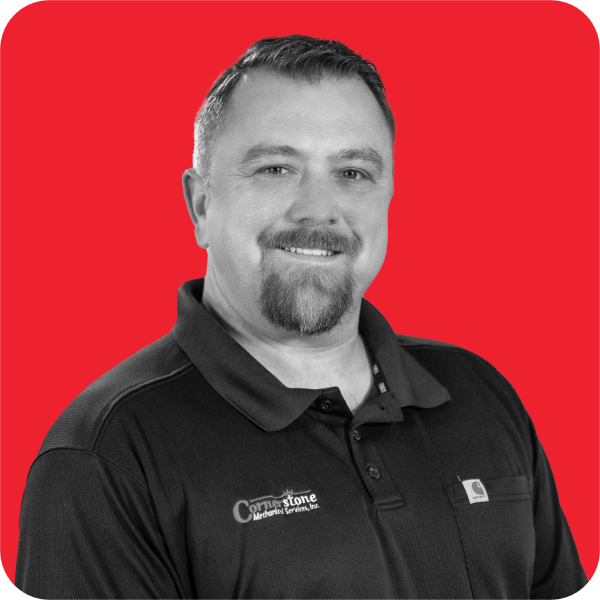
Mark Couch serves as an account director for Cornerstone Mechanical Services, LLC, a precision millwright services provider for facilities across Texas and new construction projects across the United States. Mark got his start with Cornerstone Mechanical in 2001 as an apprentice and became heavily involved in vibration monitoring and analysis, earning his Cat IV certification. As an account director, he enjoys applying his technical knowledge to help solve his clients’ problems.