
On a data center project, pumps and other rotating equipment may fall within the mechanical package—but that doesn’t necessarily mean the precision work required to install and commission that equipment is clearly defined in the MEP scope.
Setting, leveling, grouting, shaft alignment and baseline vibration testing require specialized skills that may be performed by the MEP contractor, equipment vendor or a specialty millwright contractor, depending on the project.
Defining who owns that work early can help prevent scope gaps during installation and commissioning—and help ensure critical rotating equipment is installed correctly from the start.
What MEP Covers on a Data Center Project
MEP stands for mechanical, electrical and plumbing: the core building systems required to support data center operations.
The mechanical scope typically includes cooling infrastructure such as chillers, cooling towers, CRAC/CRAH units, pumps, piping and controls. Electrical covers power distribution, backup generation and UPS systems, while plumbing includes the supporting water systems required by the facility.
Within that broad mechanical package, however, there’s another question worth asking:
Who is responsible for the precision installation of the rotating equipment?
Where Specialized Millwright Work Fits
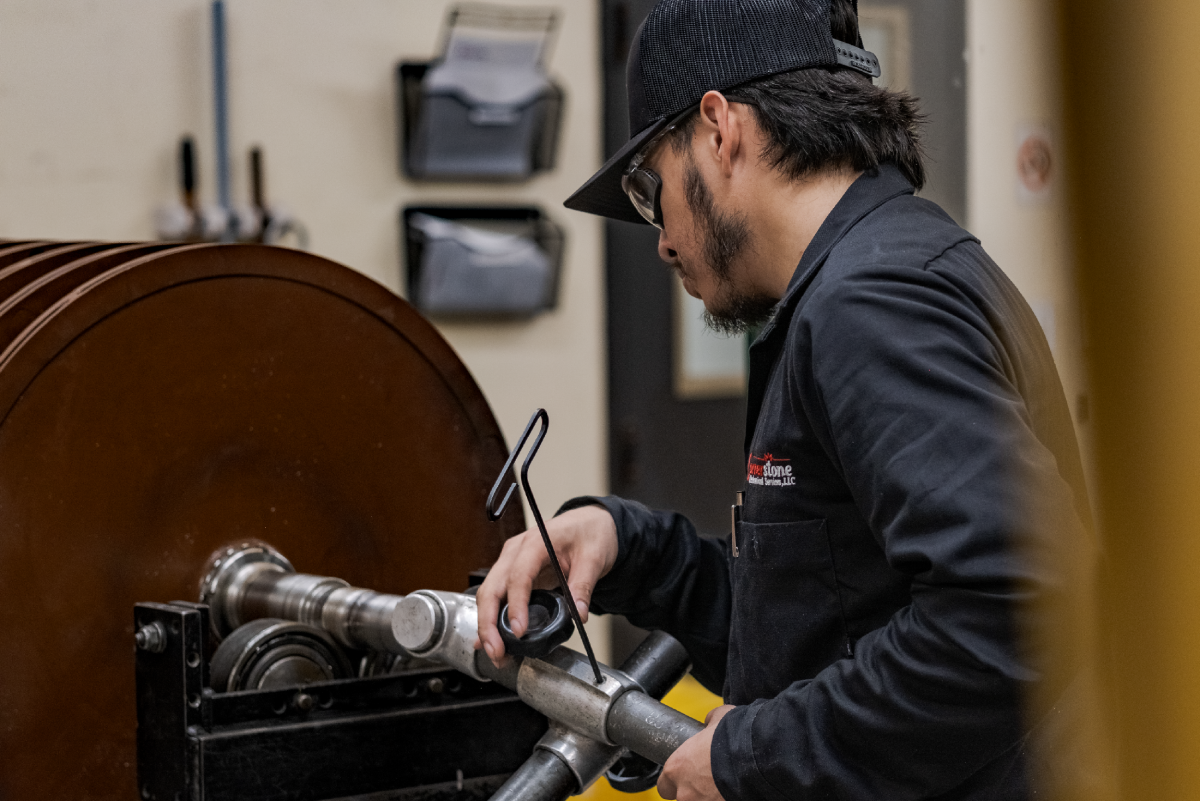
Responsibility for rotating equipment installation varies by project. On some data center builds, the mechanical or MEP contractor performs the work in-house. On others, portions of the installation and commissioning scope are subcontracted to a specialty millwright contractor.
The distinction isn’t simply who installs the equipment—it’s the precision required at the equipment interface.
A millwright’s scope may include:
- Setting and leveling pumps and other rotating equipment
- Precision grouting
- Checking and correcting soft foot
- Checking for pipe strain
- Precision shaft alignment
- Baseline vibration testing
- Troubleshooting installation-related vibration issues during startup and commissioning
These details matter because installation conditions such as misalignment, soft foot and pipe strain can contribute to excessive vibration, premature bearing and seal wear, and reduced equipment life.
Those problems may not always be obvious during initial startup or punch-list completion. Establishing proper installation conditions and baseline vibration readings before turnover gives the owner a stronger starting point for long-term equipment reliability.
Why Contractors Use Specialty Millwright Partners
Data center construction requires a wide range of specialized trades working within aggressive schedules. For GCs and MEP contractors, the question isn’t always whether their team can perform a particular scope—it’s where their labor and expertise are best utilized.
Bringing in a specialty millwright contractor for rotating equipment allows the MEP team to maintain focus on the broader mechanical package while giving dedicated attention to precision equipment installation.
A millwright partner can work alongside the mechanical contractor, OEM, commissioning team and other trades already on the project without disrupting the overall MEP structure.
Questions to Ask Before Finalizing the MEP Scope
Before rotating equipment arrives on site, contractors and owners should clearly establish who is responsible for:
- Receiving and setting the equipment
- Final leveling
- Precision grouting
- Soft-foot checks and correction
- Pipe strain verification
- Final shaft alignment
- Baseline vibration testing
- Correcting installation-related vibration issues before turnover
- Documenting final alignment and vibration conditions for the owner
Clarifying these responsibilities early can prevent an important piece of the mechanical package from becoming a scope gap later in the project.
What This Looks Like in the Field
Cornerstone Mechanical Services has supported data center projects across North Texas, West Texas and the Texas Panhandle with precision rotating equipment installation, commissioning and reliability services.
On one recent data center project, Cornerstone was originally brought in to support a single building. After completing that work, our team was awarded rotating equipment work on four additional buildings at the same facility.
Our recent data center work has included chilled-water pump setting, leveling, grouting, precision shaft alignment and vibration testing, along with maintenance, troubleshooting and repair of rotating equipment already in service.
That experience allows our team to support rotating equipment at more than one stage of its lifecycle—from initial installation and commissioning to ongoing reliability and repair.
Installation Is the Beginning of the Reliability Lifecycle
Precision installation does more than help equipment meet startup requirements. It establishes the mechanical condition from which future equipment performance can be measured.
Baseline alignment and vibration data collected during commissioning can provide valuable reference points for future condition monitoring and troubleshooting. If vibration levels change later, the maintenance team has documented startup conditions to compare against.
That creates an opportunity to think about rotating equipment reliability as a lifecycle rather than a one-time installation scope. Install it correctly, establish the baseline, monitor its condition, correct developing issues and keep it running.
Define the Scope Before Installation Begins
Cornerstone Mechanical Services specializes in the precision installation, alignment, testing, maintenance and repair of rotating equipment. We are not a general MEP contractor and do not need to own the broader mechanical package to support a data center project.
Our team can work as a specialty subcontractor alongside the MEP contractor, general contractor, OEM and commissioning team already on the project.
If you have an upcoming data center project, defining responsibility for the rotating equipment scope early can help avoid questions later during installation and commissioning.
Connect with our team or call 214-225-7038 to discuss the rotating equipment scope on your next data center build.